I Tried Reformer Pilates Today — Here's Why I'm Adding It to My Routine
A first-person, no-hype review of my first reformer pilates class — what surprised me, what hurt the next day, and why I'm slotting it in alongside my existing runs and lifting as a recovery-friendly strength habit.
By The Eunoia Team · 2026-05-25 · 7 min read
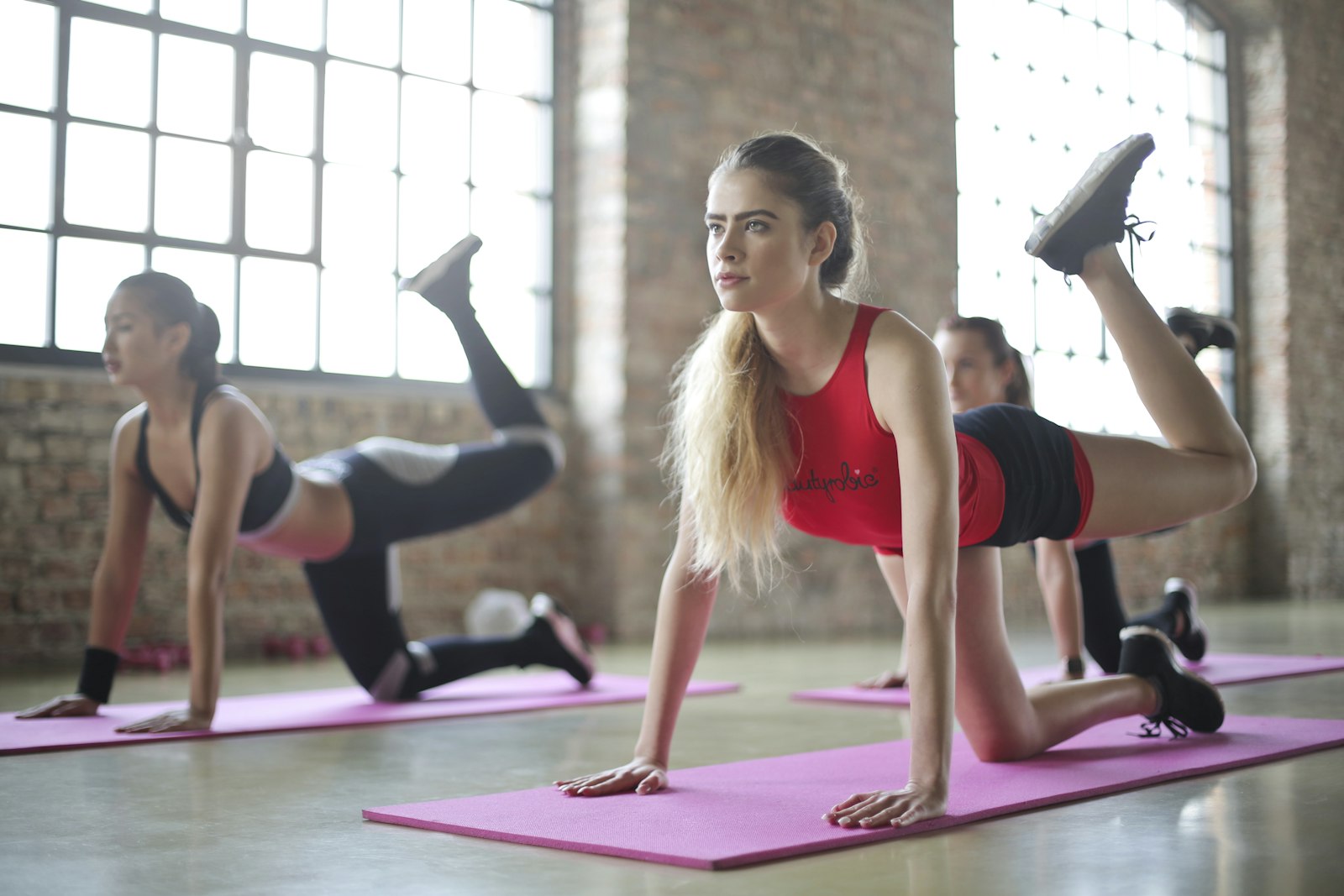
I walked into a reformer pilates studio for the first time today. I'd been curious for months — half the people I follow who actually look strong (not just lean) seem to credit it — but I'd kept putting it off. So this is a fresh, same-day write-up: what the class actually felt like, what I noticed in my own body, and why I'm planning to add one reformer session a week to the routine I already have.
The routine I'm adding it to
Some context, because "should I try X" depends entirely on what X is being added to. My current week looks like:
- Two strength sessions in the gym — mostly compound lifts.
- Two easy runs (roughly 5k each) and one longer run at the weekend.
- A daily 10-minute mobility flow in the morning, mostly hips and thoracic spine.
- Walks. Lots of walks. They're the load-bearing habit underneath everything else.
That routine works for me, but I've been quietly aware of two gaps: my deep core never really gets challenged outside of a heavy squat, and my posterior chain mobility tightens up the more I run. Reformer pilates kept showing up in my own goal review as a candidate to fix both. Today I finally tested the theory.
What the class actually was
The reformer is a sliding carriage on rails, with springs at one end and a foot bar, straps and shoulder rests for resistance. The instructor sets the spring tension; you do everything from footwork to planks to leg circles on this moving platform. The first thing I learned: the springs don't make it easier, they make it harder to cheat. Any time I tried to use momentum or load a stronger muscle to spare a weaker one, the carriage wobbled and snitched on me.
The class itself was 50 minutes, 12 of us, and the structure was roughly:
- Footwork on the carriage — looks like leg presses, isn't. Every rep had to be controlled both directions, and you're cued to keep the pelvis neutral the entire time.
- Core series — variations of "the hundred", leg circles, and a brutal kneeling roll-out using the straps.
- Standing and side work — single-leg squats off the carriage, side-lying leg work that hit muscles I genuinely could not name.
- Stretch finish — long, supported hamstring and hip openers using the straps, which felt incredible after the rest of it.
What surprised me
1. It's a strength workout in disguise
I expected something closer to a stretching class with extra steps. It wasn't. By minute 15 my obliques were trembling. By minute 30 my standing leg in a single-leg squat was shaking in a way that 100kg back squats don't produce. The intensity is low per rep but you never get a break — the carriage is always asking for tension somewhere.
2. The cueing is the workout
"Ribs down. Glutes engaged. Pelvis level. Now move." That sequence, held for ten reps, exposes every place you've been compensating for years. I left feeling like I'd had a free movement assessment as much as a class.
3. It's social in a low-key way
I'd assumed it would be silent and serious. It wasn't — people chatted before and after, the instructor knew everyone's names, and there was a small ritual of wiping down your reformer at the end. For a habit to stick I need it to be at least mildly pleasant socially, and this cleared that bar easily.
4. It does not replace anything
This is the most important thing I want to flag. I've seen reformer pilates marketed as "all the workout you need". From one class that's plainly not true for me — there's no aerobic stimulus, no heavy load, no overhead pressing pattern. It's a brilliant complement to lifting and running, not a substitute. Anyone trying to use it to replace those will be disappointed; anyone using it to round them out will probably love it.
The case for adding one new exercise (any new exercise)
Stepping back from reformer pilates specifically: I think most people with an established routine benefit from periodically adding one new modality. Not five. One. Here's why.
- It exposes blind spots. The muscles that shook today are muscles my current programme isn't loading. I couldn't have known that without trying something new.
- It resets motivation. Familiar workouts get efficient and quiet. A new class is loud — you're paying attention again, which carries over into the sessions you'd started phoning in.
- It builds resilience to boredom. If one of my staples disappears (an injury, a closed gym, a busy month), I now have a second thing I genuinely want to do.
- It diversifies the stimulus. Different planes of motion, different time-under-tension, different stabilisers. Long term that adds up to a more robust body.
The trap is adding too many things at once and then quietly dropping all of them within a fortnight. One new addition, slotted into an existing routine in a specific weekly slot, is the move. For me that's going to be Thursday evenings — between my two strength days, so it acts as active recovery rather than competing for the same energy.
How to pick your "one new exercise"
If reformer pilates doesn't appeal, the criteria I'd use to pick something:
- It addresses a known gap. Mostly cardio? Try strength. Mostly lifting? Try something rotational or balance-based. Mostly desk-bound? Try anything with sustained movement.
- It has a fixed time and place. Booked classes beat "I'll fit it in" every time. Pay in advance if you can — the sunk cost is the point.
- You can tolerate it for eight weeks. Not love. Tolerate. That's the window in which the actual physical adaptations show up.
- It doesn't evict a habit that's already working. Adding shouldn't mean subtracting from your current keystone routines.
What hurts the next day
I'm writing this six hours after the class so the full verdict is tomorrow's problem, but the early signal: deep core, inner thighs, and the small stabilisers around the hips. Nothing sharp, nothing that worries me — just the specific, slightly smug ache of muscles that finally got asked to do their job.
Will I go back?
Yes. Booked next week already. I'm treating it as an eight-week experiment: one class per week, no change to my lifting or running, and I'll review at the end whether I'm moving better and whether I want to keep it permanently. That's the same way I'd evaluate any new habit — define the window, hold the rest of the routine steady, and judge it on its merits, not on the novelty of the first session.
If you've been circling something — pilates, climbing, swimming, jiu-jitsu, ballet, anything — this is your nudge. Pick one. Book it for this week. Add it to what you've already got working. The worst case is you learn something about your body. The best case is you find a habit you'll keep for a decade.
Tags: reformer pilates, new habits, exercise, strength training, recovery, habit stacking